More Founders.Shorter Runs.
Starting got cheap. Staying got harder.
Open LinkedIn and it feels like half your network founded something last quarter.
Open the App Store and there’s another AI product every morning.
So the obvious take is: entrepreneurship is booming.
But does more people starting mean more people staying and whether buyers can still tell signal from noise when everyone can ship?
My working hypothesis:
There are more founders now than before the LLM era. However, average tenure is shorter. Building got easier. Getting customers got harder, because the volume of solutions made buyer decisions heavier.
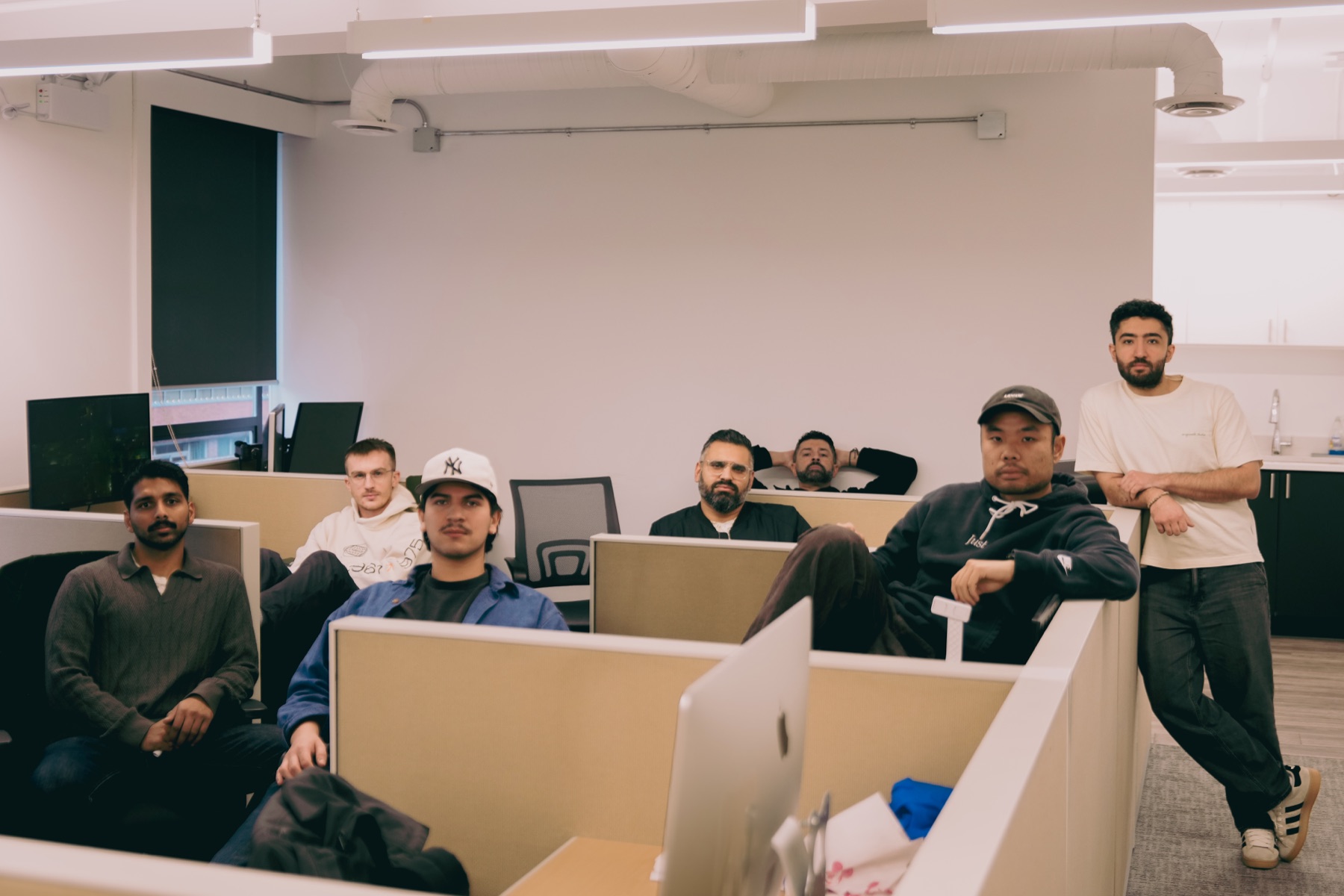
Althra founders in the Vancouver office.
Part of that is measurable. Part of it is still a thesis.
The top of the funnel got wider
Census business filings, App Store launch volume, and LinkedIn’s Economic Graph still focus on the U.S. market, so that’s what I followed. Not because the pattern is only American, but because the data was cleanest there.
Looking at that publicly available data: Americans filed 5.67 million business applications in 2025, versus 3.50 million in 2019 (U.S. Census Bureau, Business Formation Statistics). Roughly +62%.
New iOS apps jumped to about 557,000 in 2025 after years of decline (Appfigures). Sensor Tower put 2025 closer to ~600,000, with ~560,000 already in the first half of 2026.
LinkedIn’s Economic Graph said U.S. members adding “Founder” rose 69% year over year into late 2025; nearly triple since 2022. “Founder” showed up on LinkedIn’s Jobs on the Rise 2026 list for the first time.
Stripe Atlas incorporated 23,000 companies in 2025. 42% said they were building AI, up from 15% in January 2023. Carta: solo founders were 23.7% of new companies in 2019 and 36.3% in H1 2025.
So yes… more filings, more apps, more people claiming the title, more people starting alone.
That part of the hypothesis holds.
The middle of the funnel did not keep up
Census also tracks what it calls high-propensity applications. In plain terms: filings that look more likely to become real payroll businesses companies that hire people; not just paperwork that gets an EIN and goes quiet.
| Year | Total apps | High-propensity | Share likely to hire |
|---|---|---|---|
| 2015 | 2.80M | 1.20M | 43% |
| 2019 | 3.50M | 1.32M | 38% |
| 2021 | 5.39M | 1.84M | 34% |
| 2025 | 5.67M | 1.71M | 30% |
Source: U.S. Census BFS.
In a typical recent month (July 2026), Census counted about 579,000 applications and projected only about 30,000 would become payroll businesses within four quarters. Roughly one employer firm per nineteen applications.
In 2026, Census even pulled internet-sales applications out of the high-propensity series because they weren’t converting into employers.
On the App Store side, launches surged while downloads barely moved. Apple’s live catalog only grew by about 211,000 apps in 2025 despite hundreds of thousands of new listings. Removals and churn ate the rest. Apple deleted 166,899 apps in 2025, including 72,271 for being outdated.
Google Play’s live catalog fell roughly 47% from early 2024 to April 2025 as low-quality and abandoned apps got purged.
Shipping got cheap. Attention didn’t. Platforms are already cleaning up the inventory.
More founders. Same number of early checks.
If more people are founding, you’d expect more pre-seed.
That’s not what shows up.
Canada (CVCA 2025): $8.0B / 571 deals. 26 mega-deals took about two-thirds of the dollars.
U.S. seed (PitchBook–NVCA): ~7.4k deals in 2021 → ~4.7k in 2025.
More people can incorporate. That has not shown up as more early checks.
The second half is still a hypothesis
Here’s where I get more careful.
I think average founder tenure has dropped more people try the title, fewer stay in it long enough for it to become a company. I also think buyer decisions got heavier: when everyone can ship, the catalog of “solutions” expands faster than a buyer’s ability to evaluate them.
That second half is directionally consistent with the data we do have. Filings and “Founder” titles are up. High-propensity share is down. Apps launch faster than they get downloaded, and platforms are deleting what doesn’t stick. Solo starts are up. AI-labeled companies are everywhere.
None of that is the same thing as a clean chart of how long people keep “Founder” on their LinkedIn, or a measured rise in B2B decision fatigue from 2022 to 2026. Those charts would settle the argument. We don’t have them yet.
So I won’t pretend we do.
What the existing numbers do say is simpler:
More people can look like founders. Fewer of those starts clearly become durable companies. Duration and buyer friction are the missing charts but the funnel already tells you where the pressure moved.
Building got easier. The filter moved later to customers, attention, and the willingness to keep going after the announcement.
If you’re building in this era
The status game rewards the announcement.
The market rewards the week after the announcement.
Friction didn’t disappear. It moved from “can I make a product?” to “can I make anyone care and can I keep caring when they don’t?”
That’s the real scarcity now.
Not founders.
Founders who stay.
Works Cited
- Appfigures. “This Week in Apps.” Appfigures, 5 Dec. 2025, appfigures.com/resources/this-week-in-apps/20251205.
- Apple. “App Store Transparency Report 2025.” Apple, 2025, www.apple.com/legal/app-store/transparency/2025/.
- “Breaking the Trend: Small Business Creation Jumps 69% as Entrepreneurs Bet Big on Growth.” LinkedIn News, 3 Dec. 2025, news.linkedin.com/2025/breaking-the-trend--small-business-creation-jumps-69--as-entrepr.
Show all sources Hide additional sources
- Canadian Venture Capital and Private Equity Association. “Year-End 2025.” CVCA, 2026, www.cvca.ca/insights/market-reports/year-end-2025/.
- Carta. “Solo Founders Report.” Carta, 9 Dec. 2025, carta.com/data/solo-founders-report/.
- Fairlie, Robert. National Report on Early-Stage Entrepreneurship in the United States: 2025. Ewing Marion Kauffman Foundation, 15 May 2026, indicators.kauffman.org/wp-content/uploads/sites/13/2026/05/2025-Early-Stage-Entrepreneurship-National-Report.pdf.
- Google. “Keeping the Google Play & Android App Ecosystem Safe.” Google Blog, 2025, blog.google/security/keeping-google-play-android-app-ecosystem-safe-2025/.
- “Google Play Sees 47% Decline in Apps Since Start of Last Year.” TechCrunch, 29 Apr. 2025, techcrunch.com/2025/04/29/google-play-sees-47-decline-in-apps-since-start-of-last-year/.
- “LinkedIn Jobs on the Rise 2026: 25 Fastest-Growing Roles in the U.S.” LinkedIn News, 2026, www.linkedin.com/pulse/linkedin-jobs-rise-2026-25-fastest-growing-roles-us-linkedin-news-dlb1c.
- National Venture Capital Association. NVCA 2026 Yearbook. NVCA / PitchBook, Apr. 2026, nvca.org/wp-content/uploads/2026/04/NVCA-2026-Yearbook-4.9.26.pdf.
- “Report: App Store Added Nearly as Many New Apps in H1 2026 as in All of 2025.” 9to5Mac, 20 July 2026, 9to5mac.com/2026/07/20/report-app-store-added-nearly-as-many-new-apps-in-h1-2026-as-in-all-of-2025/.
- Stripe. “Stripe Atlas Startups in 2025: Year in Review.” Stripe Blog, 18 Dec. 2025, stripe.com/blog/stripe-atlas-startups-in-2025-year-in-review.
- “United States: Self Employment.” TheGlobalEconomy.com, World Bank / ILO series, www.theglobaleconomy.com/USA/self_employment/.
- U.S. Bureau of Labor Statistics. “Business Employment Dynamics.” BLS, www.bls.gov/bdm/bdmage.htm.
- U.S. Census Bureau. “Business Formation Statistics.” United States Census Bureau, 12 Aug. 2026, www.census.gov/programs-surveys/bfs.html.